Much unfolds in the film's subtext, in what's left unsaid and off-screen. There's a latent tension that's hard to articulate, even though it's palpable: in shots of the father standing on the railing, disappearing into the sea at night, crying alone on his bed, marveling at having reached 30, or in much more subtle moments, like when he crosses the street in front of a bus without looking and is honked at. This father may be depressed, bipolar, or suffering from another mental disorder, and seems to be battling it silently, but Charlotte Wells has the tact and intelligence not to state things explicitly, leaving us to interpret what's happening on screen, just as her daughter struggled to understand her father as a child. In this respect, the film perfectly captures the young girl's perspective. Images of happiness subtly instill an irrepressible sense of sadness, forcing the viewer to fill in the gaps and imagine what remains unsaid.
As I mentioned earlier, the vast majority of the film is solid without being extraordinary, then comes the devastating ending, which is completely unexpected despite the numerous foreshadowings throughout the editing, suddenly elevating the film to rarely reached emotional heights. The final minutes brilliantly intertwines time periods and locations to bring father and daughter together in a single gesture, each an adult with a child to care for, both during their farewell at the airport and in an abstract nightclub bathed in strobe lights. The direction, editing, songs, and music convey everything that words alone cannot express, and above all, they do so with the tools of cinema, thus amplifying its power tenfold.
It's a dizzying film that explores the mystery of childhood, memories, and the people we love without truly knowing them. This is a film about acknowledging that our parents had their suffering, their limitations, and that the meaning of their actions exists, even if it eludes us. Charlotte Wells has found the perfect rhythm, lending an almost fantastical strangeness to her narrative through masterful editing - the very stuff of memories and dreams. The movie dazzles with its delicacy, its ability to remain close to the unspeakable nature of feelings without offering a definitive interpretation.
Like the final long panoramic shot spanning three scenes, the film constantly plays with time. Instead of a continuous narrative, we observe the discontinuity of experiences remembered, reworked, and re-examined. The film is based less on what was recorded on the tapes filmed by the father than on the person holding the camera, what he chose to focus on, and therefore, his intentions. The film works masterfully, almost miraculously given the delicate balance it strikes between saying too much and too little, because it allows scenes time to develop, even what initially seems trivial, which will be reinterpreted in light of the ending. It's about wanting to travel through time and meet a loved one in an impossible space where, for once, you are both on the same level and can finally understand who he is, or who he was. The ending is particularly touching because it allows us to adopt the perspective of a child, who misses so much but still manages to perceive a certain disconnect from what one would expect from a carefree vacation, before abruptly projecting us into an adult perspective, from the same person, who revisits that last summer spent with her father. This sudden projection into the child who has become an adult, is deeply moving and will haunt me for a long time.
The father closes the camcorder and gently drifts away into his daughter's memories. The only place where those who have left us remain.









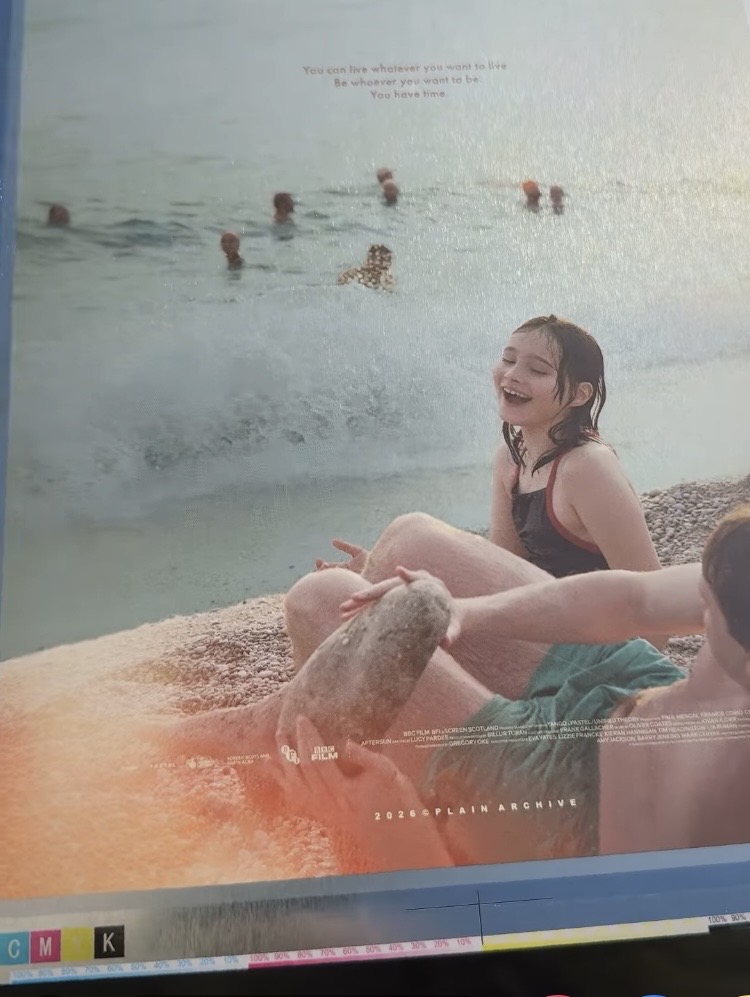




 so missed it again unfortunately. Not really too fussed about this release though thankfully... mainly because I still haven't seen the film yet


 ?
?