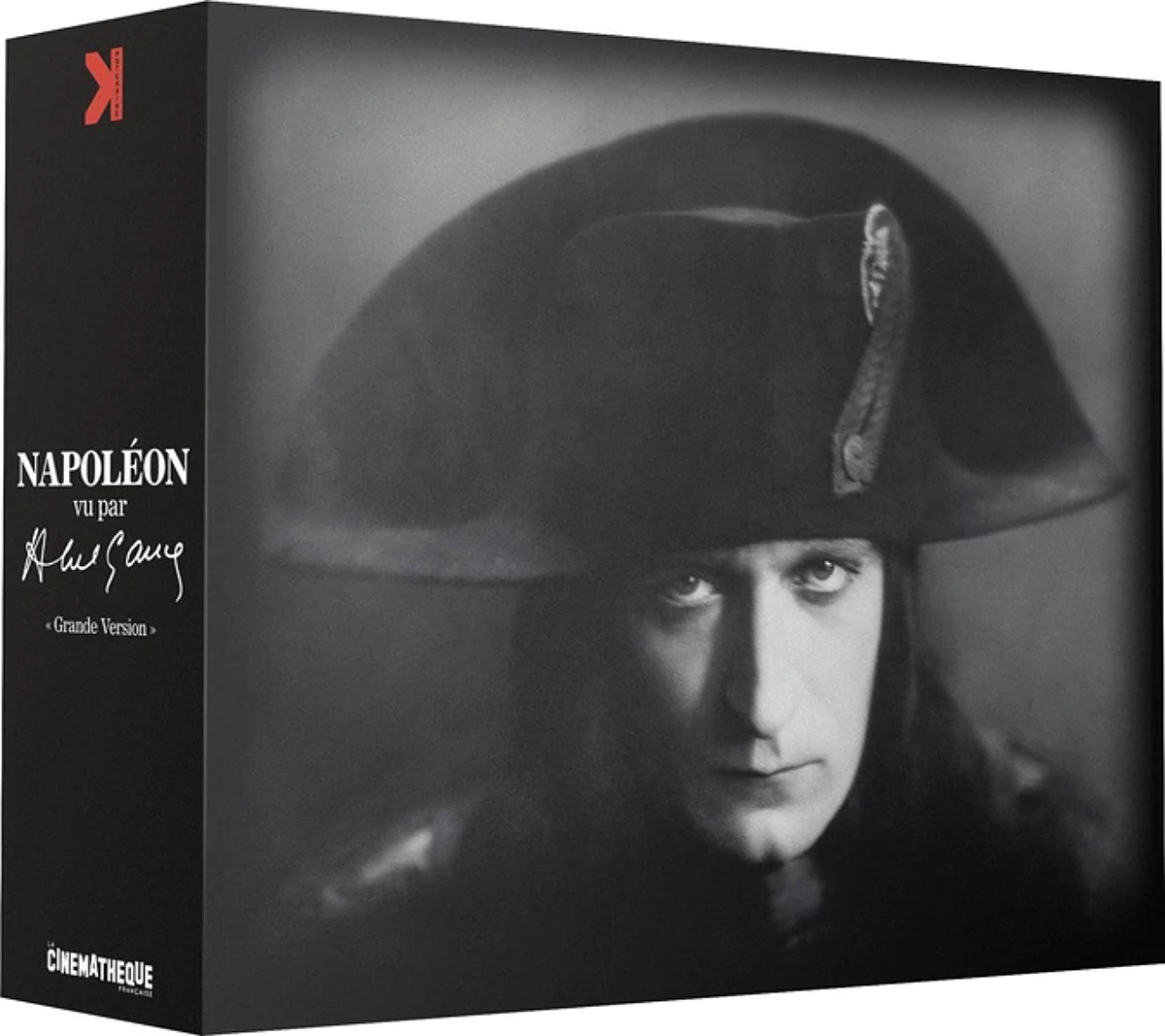
The Potemkine Films 4K Ultra HD Blu-ray edition of Abel Gance’s Napoléon (1927), set for release on November 4, 2025, is a collector’s edition of the restored "Grande Version" (approximately 7 hours), spearheaded by the Cinémathèque Française under the direction of Georges Mourier.
Source Material for the Potemkine 4K Edition
The source material for this restoration primarily consists of 35mm nitrate film prints from the original 1927 production, supplemented by other archival elements. Key details about the source include:
- Original 35mm Nitrate Negatives and Prints: The restoration utilized surviving 35mm nitrate negatives, internegatives, and combined prints held by archives like the Cinémathèque Française and other global institutions, including the Cinemateca Brasileira. These are the primary sources, as nitrate film was the standard for Napoléon’s production, capturing high detail for its era.
- Multiple Film Elements: Gance’s production was massive, reportedly using 400,000 meters of film and involving seven camera units simultaneously, resulting in multiple negative cuts and at least 22 different versions of the film. The Cinémathèque Française had access to previously unavailable elements, including some not used in earlier restorations like Kevin Brownlow’s 5.5-hour version, allowing for a more complete reconstruction of the "Apollo version" (circa 7 hours).
- Restoration Process: The 16-year restoration, described as a mix of “detective work, digital wizardry, and extraordinary dedication,” involved piecing together footage from scattered global sources, using Gance’s production notes to align with his original vision. Chemical processes and modern digitization techniques were employed to restore missing frames and enhance image quality. The film was scanned at 5K resolution before being mastered for 4K output, ensuring high fidelity to the original celluloid.
- Color and Tinting: Some sequences used the Keller-Dorian cinematography process for color effects, and others were tinted (e.g., tricolor blue-white-red for Polyvision scenes). These were preserved or recreated using the best available prints, with tinting restored to match the 1927 aesthetic.
Resolution Potential of 35mm Nitrate Film:
- 35mm Film Resolution: High-quality 35mm nitrate film from the 1920s, when well-preserved, can theoretically resolve detail equivalent to 6K to 8K in modern digital terms, depending on the film stock’s grain structure, lens quality, and exposure conditions. Gance’s Napoléon was shot with meticulous attention to detail, using fine-grain nitrate stock, which supports high-resolution scans. However, the actual resolution depends on the condition of the specific prints used.
- Condition of Prints: Nitrate film is notoriously fragile, prone to scratches, chemical degradation, and fading. The restoration team noted “heavy damage in places” and “multiple components with their own sets of challenges” (e.g., scratches, missing frames). Despite this, the use of multiple prints allowed them to select the best-preserved elements, and 5K scanning helped capture maximum detail from the originals.
- Polyvision and Aspect Ratio: The film’s standard scenes are in a 1.33:1 aspect ratio, while the Polyvision triptych sequences expand to approximately 4.00:1, requiring three synchronized 35mm strips. The restoration preserved this format, with individual triptych panels and widescreen sequences scanned separately to maintain clarity. The high-resolution scans ensure that the triptych’s expansive visuals benefit from 4K’s pixel density.
Restoration and Scanning Process:
- 5K Scanning: The Cinémathèque Française scanned the film elements at 5K, which exceeds the 4K output resolution. This oversampling allows for better detail retention, noise reduction, and digital cleanup of artifacts like scratches or grain, while preserving the “soul and feel” of the celluloid original. The 5K scans provide a buffer to ensure the 4K master captures as much detail as possible from the source.
- Digital Restoration: Advanced digital tools were used to repair damaged frames, stabilize footage, and enhance contrast and sharpness. This process can effectively “fill in” minor imperfections, making the final 4K image appear crisp and detailed, even if some source prints were degraded. However, areas with severe damage may still show limitations, as no restoration can fully recover lost detail.
- Comparison to Previous Restorations: The earlier Kevin Brownlow restoration (5.5 hours) was scanned at 2K and released on Blu-ray in 2016. Users noted impressive detail for a 1927 film, but the Cinémathèque’s 5K scan offers superior clarity, especially for fine details in costumes, sets, and Polyvision sequences. The additional hour of restored footage (e.g., the Toulon sequence) also benefits from better-preserved elements.
- Practical Outcome in 4K:
- Visual Quality: The 4K restoration is likely to deliver a significant improvement over previous 2K Blu-ray releases, with sharper images, better contrast, and more vibrant tinting. The 5K source scans ensure that the 4K output maximizes the detail inherent in the 35mm nitrate film, particularly for well-preserved sections. However, some variability in quality may remain due to the inconsistent condition of the source prints (e.g., scratches or faded areas).
- Polyvision in 4K: The triptych sequences, which rely on three 35mm panels, will particularly benefit from 4K’s resolution, as the wider aspect ratio (4.00:1) demands higher pixel density to avoid softness. The restoration’s ability to present these panels individually or as a widescreen composite ensures a visually stunning experience, though seams between panels may still be visible, as Gance couldn’t fully eliminate them in 1927.
- Limitations: While 35mm nitrate film can theoretically support 4K and beyond, the practical resolution may be constrained by print damage or inconsistencies across the multiple film elements used. Areas with heavy restoration (e.g., digitally repaired frames) may not match the clarity of pristine sections but will still look better than in prior releases due to the higher scan resolution and advanced processing.
Collector’s Edition Details:
The Potemkine release includes 2 4K UHD discs, 3 Blu-ray discs, a 312-page book, a musical booklet, and bonus content like documentaries and sequence analyses. This suggests a comprehensive presentation, with the 4K discs likely prioritizing the main feature for optimal quality.
- Comparison to Other Releases: The BFI’s 2016 Blu-ray (2K, 5.5 hours) was praised for its detail but limited by its lower scan resolution. The Potemkine 4K edition, with its 5K scans and additional restored footage, is considered the definitive version, though it’s Region B and may lack English subtitles, which could be a concern for some viewers.