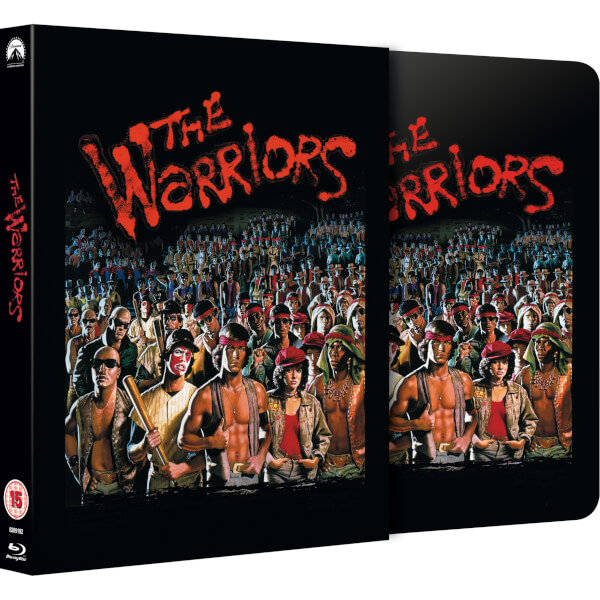
Despite all the hurdles, all the budget battles, all the run-ins with the gangs, The Warriors opened in 670 theaters nationwide on February 9, 1979, debuted at number one at the box office, and pulled in $10 million in its first two weeks — nearly double the film's production costs. People were lining up around the block at screenings. In a rave review for the New Yorker, Pauline Kael declared that "with Walter Hill's The Warriors movies are back to their socially conscious role of expressing the anger of the dispossessed." (Voice critic Andrew Sarris was less effusive in his review, calling the film "too studiously unreal" and not "as glorious and memorable as some of its less discriminating admirers would have it.")
But the celebration was short-lived. On Monday, February 12, a nineteen-year-old boy was fatally shot at a drive-in showing of the film in Palm Springs, California. That same night, an eighteen-year-old bled out after being stabbed in a movie theater 165 miles away in Oxnard. Other incidents of violence between rival gangs and moviegoers were also reported throughout the country. The news media raced to blame the production for inciting riots.
The morning after the incidents, Larry Gordon was called in to see the bosses at Paramount — then-chairman Barry Diller, and president Michael Eisner. Gordon's job for the majority of the shoot had been to keep the bosses out of Hill's hair, giving the director the room he needed to stretch the schedule and keep on shooting. But the violence had pushed matters past the point of budget concerns.
That weekend, Gordon had broken up a fight himself in the lobby of a movie theater in Westwood, California, where he had gone to see the film with his wife, sons, and mother. Inside, the audience was screaming and stomping their feet from the moment the Wonder Wheel flashed across the screen. "It was like watching Ali and Frazier fight in Madison Square Garden," Gordon recalls.
The meeting didn't go well: Despite the film's financial success and an impassioned protest from Gordon, Paramount ultimately decided to pull the movie from theaters.
"It wasn't worth having somebody else get stabbed or shot or killed in line because of a movie we made. It just wasn't worth it," Eisner, who would later become the CEO of the Walt Disney Company, tells the Voice. "Thirty years later it maybe was an overreaction, but I think it was the right reaction." (Sarris's Voice review agrees with Eisner's modern-day assessment that pulling the film was an overreaction: "The gang members on the screen are pussycats next to many of the people I see walking in the streets," he wrote. "Hence, there is no point in banning The Warriors.")"











 ).
).


