


c|net

Models posing with the new EOS M during the official launch in Singapore.
Canon has finally launched its first mirrorless interchangeable lens camera (ILC), the EOS M, that comes fitted with an APS-C sensor. Sporting a 3-inch capacitive touchscreen, the EOS M boasts many features found in its bigger brother, the EOS 650D, such as a hybrid AF autofocus system and a Movie Servo AF mode for real-time focusing.
Main features
18-megapixel APS-C CMOS sensor: The EOS M packs an 18-megapixel, APS-C CMOS sensor (similar to the EOS 650D) together with the company's proprietary DIGIC 5 image processor.
Touchscreen LCD: A 1,040k-dot resolution, 3-inch, capacitive touchscreen LCD--similar to the Canon EOS 650D--comes with multitouch capabilities allowing users to "pinch-to-zoom" during image playback and tap-to-focus or even shoot stills during video capture.
31-point autofocus system: The ILC features a hybrid AF system--phase and contrast detection--which means faster and more precise autofocus performance for videos and stills, especially with moving subjects.
Movie Servo AF: Allows shutterbugs to constantly maintain focusing during the recording of videos.
Canon dSLR lens compatibility: Shutterbugs can mount their existing Canon EOS EF and EF-S dSLR lenses to the EOS M ILC and maintain full-AF coupling as well as functionality.
Hands-on
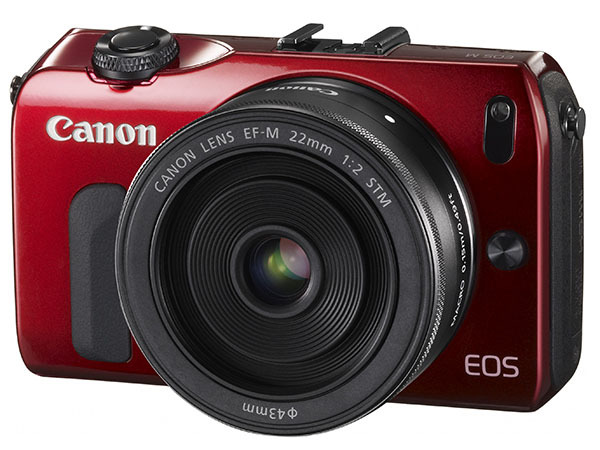
We handled the camera for a while at the event and felt that it had a robust build quality. This may be attributed to the camera's stainless steel front panel coupled with its full magnesium-alloy body. Its size can be compared with svelte ILCs such as the Panasonic Lumix DMC-GF5 and the Sony Alpha NEX-C3.

There's also a grip on the front which gives users a firmer grip of the ILC--making it easier for one-handed operation.
During our brief hands-on with the pre-production model, it soon felt as though Canon had taken some of the Canon EOS 650D and squeezed it into a compact ILC chassis. The EOS M shares a similar 18-megapixel APS-C sensor and the in-camera menu interface looks and feels virtually similar to our experience with the 650D. Some features such as the 650D's Movie Servo AF and hybrid autofocus system were also present in this snapper.

The EOS M features an APS-C image sensor and uses a new EF-M lens mount. Canon EF and EF-S lenses can also be mounted on this shooter via an optional lens adapter.
We realized that EOS M adopts a simpler interface as Canon has chose to do away with the typical P, A, S, M mode dial and uses a three-way switch instead, allowing you to select between Auto, Manual and Movie modes. You can still access the usual P, A, S, M modes via the in-camera menus, although, we found the lack of a phyical mode dial to be a minor annoyance when trying to switch between modes quickly.

Although hotshoe sits on the EOS M's top panel, you won't be able to attach an electronic viewfinder on the camera.
At the back of the sits a 3-inch, capacitive LCD screen which we found to be responsive, allowing us to make selections quickly and easily. Like any ILC with touchscreen capabilities, the options of being able to achieve pinpoint focus as well as touch-to-shoot feature makes for a more convenient shooting experience.

The EOS M comes with a 3-inch LCD screen that has a 1,040k-dot resolution.
The EOS M prototype model we tried was mounted with the new 22mm (35mm on the 1.6x crop factor) prime lens with a bright F2 maximum aperture. Pairing the camera with a general-purpose focal length made the setup highly portable which was quite impressive considering the size of its sensor. When used wide open, we liked how it managed to provide pleasing background blur.
Overall, the EOS M, with its slim form factor and large image sensor, would likely appeal to compact upgraders looking for dSLR-like quality minus the bulk as well as dSLR, users who have already invested in a stable of Canon glass.
We think the image quality of the EOS M shouldn't stray too far from the EOS 650D (which won our Editor's Choice award), but we'll have to reserve further judgment until we do a thorough review of a commercial set.
Accessories
There were two lenses announced for the EOS M: The EF-M 18-55 F3.5-5.6 IS STM and EF-M 22mm F2 STM, that are part of the EOS EFM lens lineup. The lenses use the company's Stepping Motor Technology (STM) which provides cleaner audio recordings during video capture in the Movie Servo AF mode.

The 18-55mm standard kit lens which gives users a versatile zoom range for daily use, while the faster 22mm prime lens's provides sharper images in low-light conditions and better subject isolation when used at its F2 maximum aperture. Bundled with the new camera is a Speedlite S90EX which can also be used as a master unit for wireless flash setups, too.

The Canon EF-S 10-22mm lens mounted the EOS M using the EF-EOSM mounter adapter.
Other accessories include an optional EF-EOS M mount adapter which allows users to adapt their existing Canon EF and EF-S dSLR lenses with full functionality. Beyond that, the EOS M is also compatible with most Canon accessories such as GPS receivers, flash transmitters and remote controls.
Pricing and availability

We hear the Canon EOS M may be sold as a twin-lens kit (bundled with the EF-M 18-55 F3.5/5.6 IS STM and 22mm F2 STM lenses) together with the new Speedlite 90EX flash in Singapore.
Available in red, silver, white and black, the Canon EOS M will retail in Asia from October. Pricing in the region, however, has yet to be confirmed but the EOS M with the 22mm F2 lens is expected to cost US$799.99 in the US.
Models posing with the new EOS M during the official launch in Singapore.
Canon has finally launched its first mirrorless interchangeable lens camera (ILC), the EOS M, that comes fitted with an APS-C sensor. Sporting a 3-inch capacitive touchscreen, the EOS M boasts many features found in its bigger brother, the EOS 650D, such as a hybrid AF autofocus system and a Movie Servo AF mode for real-time focusing.
Main features
18-megapixel APS-C CMOS sensor: The EOS M packs an 18-megapixel, APS-C CMOS sensor (similar to the EOS 650D) together with the company's proprietary DIGIC 5 image processor.
Touchscreen LCD: A 1,040k-dot resolution, 3-inch, capacitive touchscreen LCD--similar to the Canon EOS 650D--comes with multitouch capabilities allowing users to "pinch-to-zoom" during image playback and tap-to-focus or even shoot stills during video capture.
31-point autofocus system: The ILC features a hybrid AF system--phase and contrast detection--which means faster and more precise autofocus performance for videos and stills, especially with moving subjects.
Movie Servo AF: Allows shutterbugs to constantly maintain focusing during the recording of videos.
Canon dSLR lens compatibility: Shutterbugs can mount their existing Canon EOS EF and EF-S dSLR lenses to the EOS M ILC and maintain full-AF coupling as well as functionality.
Hands-on
We handled the camera for a while at the event and felt that it had a robust build quality. This may be attributed to the camera's stainless steel front panel coupled with its full magnesium-alloy body. Its size can be compared with svelte ILCs such as the Panasonic Lumix DMC-GF5 and the Sony Alpha NEX-C3.
There's also a grip on the front which gives users a firmer grip of the ILC--making it easier for one-handed operation.
During our brief hands-on with the pre-production model, it soon felt as though Canon had taken some of the Canon EOS 650D and squeezed it into a compact ILC chassis. The EOS M shares a similar 18-megapixel APS-C sensor and the in-camera menu interface looks and feels virtually similar to our experience with the 650D. Some features such as the 650D's Movie Servo AF and hybrid autofocus system were also present in this snapper.
The EOS M features an APS-C image sensor and uses a new EF-M lens mount. Canon EF and EF-S lenses can also be mounted on this shooter via an optional lens adapter.
We realized that EOS M adopts a simpler interface as Canon has chose to do away with the typical P, A, S, M mode dial and uses a three-way switch instead, allowing you to select between Auto, Manual and Movie modes. You can still access the usual P, A, S, M modes via the in-camera menus, although, we found the lack of a phyical mode dial to be a minor annoyance when trying to switch between modes quickly.
Although hotshoe sits on the EOS M's top panel, you won't be able to attach an electronic viewfinder on the camera.
At the back of the sits a 3-inch, capacitive LCD screen which we found to be responsive, allowing us to make selections quickly and easily. Like any ILC with touchscreen capabilities, the options of being able to achieve pinpoint focus as well as touch-to-shoot feature makes for a more convenient shooting experience.
The EOS M comes with a 3-inch LCD screen that has a 1,040k-dot resolution.
The EOS M prototype model we tried was mounted with the new 22mm (35mm on the 1.6x crop factor) prime lens with a bright F2 maximum aperture. Pairing the camera with a general-purpose focal length made the setup highly portable which was quite impressive considering the size of its sensor. When used wide open, we liked how it managed to provide pleasing background blur.
Overall, the EOS M, with its slim form factor and large image sensor, would likely appeal to compact upgraders looking for dSLR-like quality minus the bulk as well as dSLR, users who have already invested in a stable of Canon glass.
We think the image quality of the EOS M shouldn't stray too far from the EOS 650D (which won our Editor's Choice award), but we'll have to reserve further judgment until we do a thorough review of a commercial set.
Accessories
There were two lenses announced for the EOS M: The EF-M 18-55 F3.5-5.6 IS STM and EF-M 22mm F2 STM, that are part of the EOS EFM lens lineup. The lenses use the company's Stepping Motor Technology (STM) which provides cleaner audio recordings during video capture in the Movie Servo AF mode.
The 18-55mm standard kit lens which gives users a versatile zoom range for daily use, while the faster 22mm prime lens's provides sharper images in low-light conditions and better subject isolation when used at its F2 maximum aperture. Bundled with the new camera is a Speedlite S90EX which can also be used as a master unit for wireless flash setups, too.
The Canon EF-S 10-22mm lens mounted the EOS M using the EF-EOSM mounter adapter.
Other accessories include an optional EF-EOS M mount adapter which allows users to adapt their existing Canon EF and EF-S dSLR lenses with full functionality. Beyond that, the EOS M is also compatible with most Canon accessories such as GPS receivers, flash transmitters and remote controls.
Pricing and availability
We hear the Canon EOS M may be sold as a twin-lens kit (bundled with the EF-M 18-55 F3.5/5.6 IS STM and 22mm F2 STM lenses) together with the new Speedlite 90EX flash in Singapore.
Available in red, silver, white and black, the Canon EOS M will retail in Asia from October. Pricing in the region, however, has yet to be confirmed but the EOS M with the 22mm F2 lens is expected to cost US$799.99 in the US.


