Per Dealnews:
Typically when you make a purchase with your credit card, your bank charges the merchant an interchange fee for the transaction. However, after years of legal proceedings, last week retailers were given permission to pass this surcharge on to the customer instead. But will they? As it turns out, you shouldn't cut up your plastic just yet.
The new credit card surcharge stems from a 2005 anti-trust settlement in which a group of merchants claimed that Visa, MasterCard, and others were trying fix the fees that stores pay to accept credit card purchases. Now, retailers have the option to charge the consumer this fee, which could amount to as much as up to 4% of a total purchase.
MasterCard and Visa users thus may be charged a usage fee, but only if individual retailers decide to implement the surcharge. Under the settlement, the surcharge cannot top the amount that the merchant actually pays to accept credit cards, which typically falls within 1.5% and 3% of the transaction amount. Debit cards and prepaid cards do not fit into this category, and are therefore exempt from any surcharges. And, if you're in one of 10 states, including California, Colorado, Connecticut, Florida, Kansas, Maine, Massachusetts, New York, Oklahoma, and Texas, you're off the hook because of state laws prohibiting checkout fees entirely.
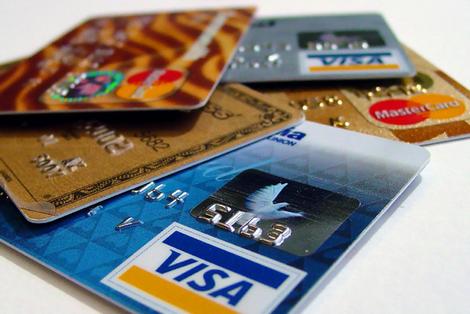 Perhaps more of a relief: Big name stores don't seem to want to change their methods, despite the new option. The National Retail Federation claims that few, if any, retailers are expected to surcharge customers. Moreover, according to Bloomberg, Walmart, Target, Sears, and Macy's have already stated that they don't plan to place the burden of additional fees on consumers, possibly for fear of upsetting them, which would potentially put merchants at a competitive disadvantage.
For the stores that choose to implement the surcharge, their policies must be completely transparent from the get-go; signs disclosing the fee must be placed on the door, during the point of sale, and on the receipt. According to watchdog group Consumer Action, that also means that the receipt must list the amount of the checkout fee, the fact that the merchant is responsible for imposing the charge, and state the fact that the percent charge isn't greater than what it had cost the retailer in the past.
However, according to TIME, the implementation of this settlement may also result in more online retail surcharges; such merchants only have to disclose a fee when asked about a payment method at the end of a sale. Moreover, although big-name brands may look at the consumer surcharge as disadvantageous to sales, less competitive markets and smaller niche mom and pop shops may be able to get away with imposing the fee in the name of expanding their profit margins.
Overall, though, there is no need to hyperventilate yet. While the new law does allow for leeway on what retailers can and can't do, it doesn't mean a one-size-fits-all tax on all merchandise simply because you chose credit instead of cash. Consumers should be aware of whether or not these fees are charged at the stores of their choosing, and be mindful of the various fees particular to each credit card provider. That said, there doesn't seem to be a surge of surcharges on the horizon to get up in arms about just yet.
Typically when you make a purchase with your credit card, your bank charges the merchant an interchange fee for the transaction. However, after years of legal proceedings, last week retailers were given permission to pass this surcharge on to the customer instead. But will they? As it turns out, you shouldn't cut up your plastic just yet.
The new credit card surcharge stems from a 2005 anti-trust settlement in which a group of merchants claimed that Visa, MasterCard, and others were trying fix the fees that stores pay to accept credit card purchases. Now, retailers have the option to charge the consumer this fee, which could amount to as much as up to 4% of a total purchase.
MasterCard and Visa users thus may be charged a usage fee, but only if individual retailers decide to implement the surcharge. Under the settlement, the surcharge cannot top the amount that the merchant actually pays to accept credit cards, which typically falls within 1.5% and 3% of the transaction amount. Debit cards and prepaid cards do not fit into this category, and are therefore exempt from any surcharges. And, if you're in one of 10 states, including California, Colorado, Connecticut, Florida, Kansas, Maine, Massachusetts, New York, Oklahoma, and Texas, you're off the hook because of state laws prohibiting checkout fees entirely.
For the stores that choose to implement the surcharge, their policies must be completely transparent from the get-go; signs disclosing the fee must be placed on the door, during the point of sale, and on the receipt. According to watchdog group Consumer Action, that also means that the receipt must list the amount of the checkout fee, the fact that the merchant is responsible for imposing the charge, and state the fact that the percent charge isn't greater than what it had cost the retailer in the past.
However, according to TIME, the implementation of this settlement may also result in more online retail surcharges; such merchants only have to disclose a fee when asked about a payment method at the end of a sale. Moreover, although big-name brands may look at the consumer surcharge as disadvantageous to sales, less competitive markets and smaller niche mom and pop shops may be able to get away with imposing the fee in the name of expanding their profit margins.
Overall, though, there is no need to hyperventilate yet. While the new law does allow for leeway on what retailers can and can't do, it doesn't mean a one-size-fits-all tax on all merchandise simply because you chose credit instead of cash. Consumers should be aware of whether or not these fees are charged at the stores of their choosing, and be mindful of the various fees particular to each credit card provider. That said, there doesn't seem to be a surge of surcharges on the horizon to get up in arms about just yet.